
Augmented Intelligence - Where AI Capability Meets Human Judgment (EQ)
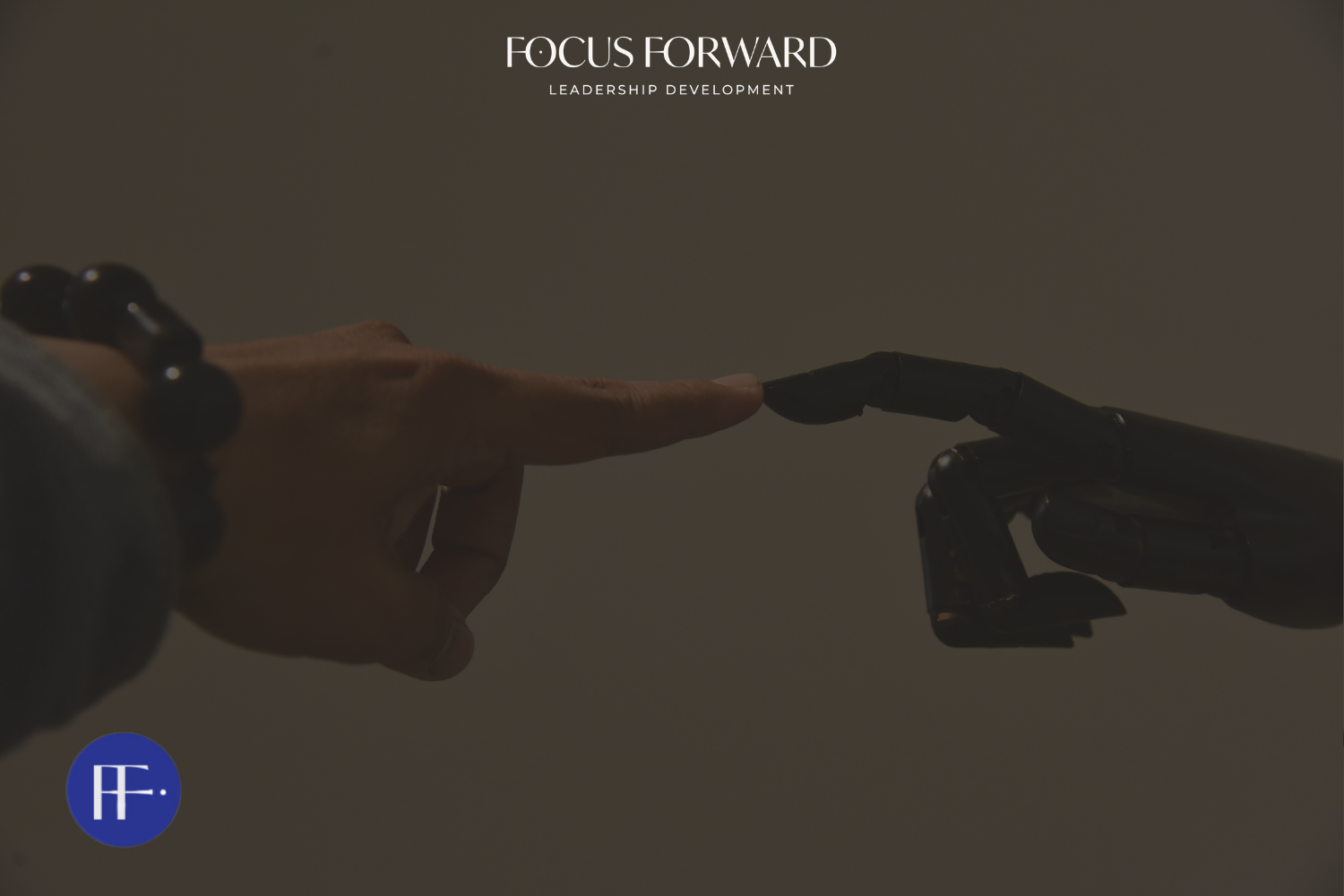
Augmented Intelligence
Where AI Capability Meets Human Judgment (EQ)
Let’s clear something up: Augmented Intelligence already has valid technical definitions. In many contexts, it refers to systems designed to enhance human decision‑making rather than replace it, often through human‑in‑the‑loop models and decision support tools.
I appreciate and agree with those definitions. They matter! For this conversation, particularly inside organizations navigating AI adoption, I build on that foundation and define Augmented Intelligence in a very intentional way:
Augmented Intelligence is Artificial Intelligence guided by Emotional Intelligence, resulting in better judgment, stronger adoption, and more sustainable change.
Consider this formula where AI results in so much more:
AI + EQ = AI2 – (Augmented Intelligence & Authentic Interaction (stay tuned))
This distinction matters because AI, on its own, doesn’t make decisions. People do!
As professionals, we know this intuitively.
AI outcomes are shaped by:
- the assumptions behind the models
- the quality and bias of the data
- the questions we choose to ask
- the decisions we make with the output
EQ influences every one of those elements.
Augmented Intelligence shows up in subtle but powerful ways:
- pausing before prompting instead of reacting
- using AI to reflect, not avoid
- drafting with AI, but deciding as humans
- considering impact, not just efficiency
Adoption starts to shift when people experience change. Resistance to AI isn't about an aversion to innovation; it's rooted in uncertainty, questions about personal impact, self-perception, and potential disruption. When people feel forced into adapting without recognition of the genuine upheaval involved, it triggers a natural response to uncertainty. For example, if an employee is learning a new AI-driven workflow but their worries are ignored, anxiety rises and productivity falters. Instead of focusing on success, they may seek validation for their struggles. Leaders who acknowledge these challenges and address them directly transform uncertainty into trust and empowerment.
What about the flipped perspective - imagine an employee who is really embracing AI adoption and is now relying almost exclusively on AI to complete their daily assignments, rarely pausing to apply their own critical thinking or judgment to the results. Instead of questioning whether the AI-generated facts are accurate, assessing if the tone is appropriate for the intended audience, or ensuring that human expertise is reflected, this employee assumes that AI alone is sufficient. Over time, colleagues and their leader begin to notice gaps in the employee's understanding and the lack of depth in their contributions. Trust in the employee’s knowledge and skills erodes, and a sense of distance forms between them and the rest of the team. While this disconnect might not be obvious at first, the lack of genuine engagement and effort quickly becomes apparent, and the challenge compounds as team dynamics suffer.
A common belief and understanding is that AI accelerates everything, the reality it can easily accelerate blind spots just as quickly.
Now - it is possible that AI with intentional EQ can minimize those blind spots and strengthen awareness. Imagine the same employee takes a different approach. Instead of relying solely on AI, they pause to review the output, ask clarifying questions, and apply their own expertise and emotional intelligence to tailor the results for the audience. By transparently sharing how they combined AI insights with their personal judgment, the employee not only delivers higher-quality work but also rebuilds trust with their team and demonstrates the value of human-AI collaboration. This approach helps close knowledge gaps and fosters a stronger sense of engagement and credibility.
Leading with EQ is how we reframe adoption of Artificial Intelligence, to an additional tool to establish our own Augmented Intelligence. Just as the calculator revolutionized mathematics by enabling people to quickly solve complex equations, AI brings similar enhancements to decision-making and interaction. While calculators didn't replace the need for mathematical understanding, they amplified human capability and allowed for greater focus on problem-solving and interpretation. In the same way, AI augments our intelligence, offering greater efficiency and accuracy, but still relies on human insight and emotional intelligence to achieve meaningful results.
Focusing on establishing Augmented Intelligence ensures AI initiatives are implemented with an understanding of human impact, not just technical success. This means viewing AI not as a replacement, but as a partner, helping us focus on creativity, strategy, and empathy.
Next, we’ll look at what changesbetween people when Augmented Intelligence is in place. Because the outcome isn’t abstract. It’s visible and it shows up as Authentic Interaction(AI²).
Consider once again the formula: AI + EQ = AI2 (Augmented Intelligence & Authentic Interaction).
Are you interested in taking the next step in improving your communication?
If you’re curious about your own communication style or want to deepen your emotional intelligence, I invite you to book a free discovery call. Let’s talk about your unique communication challenges and goals. Whether you’re in a position of power or seeking to amplify your voice, I’m here to support your journey.
